There is an invisible thread running through the aesthetic choices of 2026, and it has nothing to do with seasonal colours or the latest trend on Pinterest. It speaks to something far deeper: a collective need to feel safe. Not in the literal sense, but in the emotional one — that feeling of returning to a space that recognises you, that asks nothing of you, that simply welcomes you in.
We live in an age of overload. News arrives relentlessly and the outside world can be loud and hard to control. In this context, the home has ceased to be a mere container for life and become something far more necessary: a sensory sanctuary. A place that speaks to the part of us that needs stillness, continuity, and genuine beauty.
Interior design understood this before most. And the tendencies that will define 2026 make it unmistakably clear. Within these walls, you get to choose the frequency.
The end of aesthetics made to be shown off
For years, interiors were conceived — at least in part — to be photographed. Flawless surfaces, palettes engineered for the feed, objects chosen for their visual impact rather than their everyday meaning. 2026 marks a decisive break with that logic. The home is no longer a set — it is an experience lived from within.
Designers speak of quiet luxury: a silent, unperformed richness, built from quality that is felt through touch, light, and the proportion of space. Nothing that shouts, everything that whispers. It is not austerity — it is an adult refinement that has stopped needing applause.
This aesthetic shift mirrors a broader emotional maturity. As if, collectively, we are beginning to choose substance over surface. And the home, as a reflection of the inner self, could not but follow.
Shapes that hold you
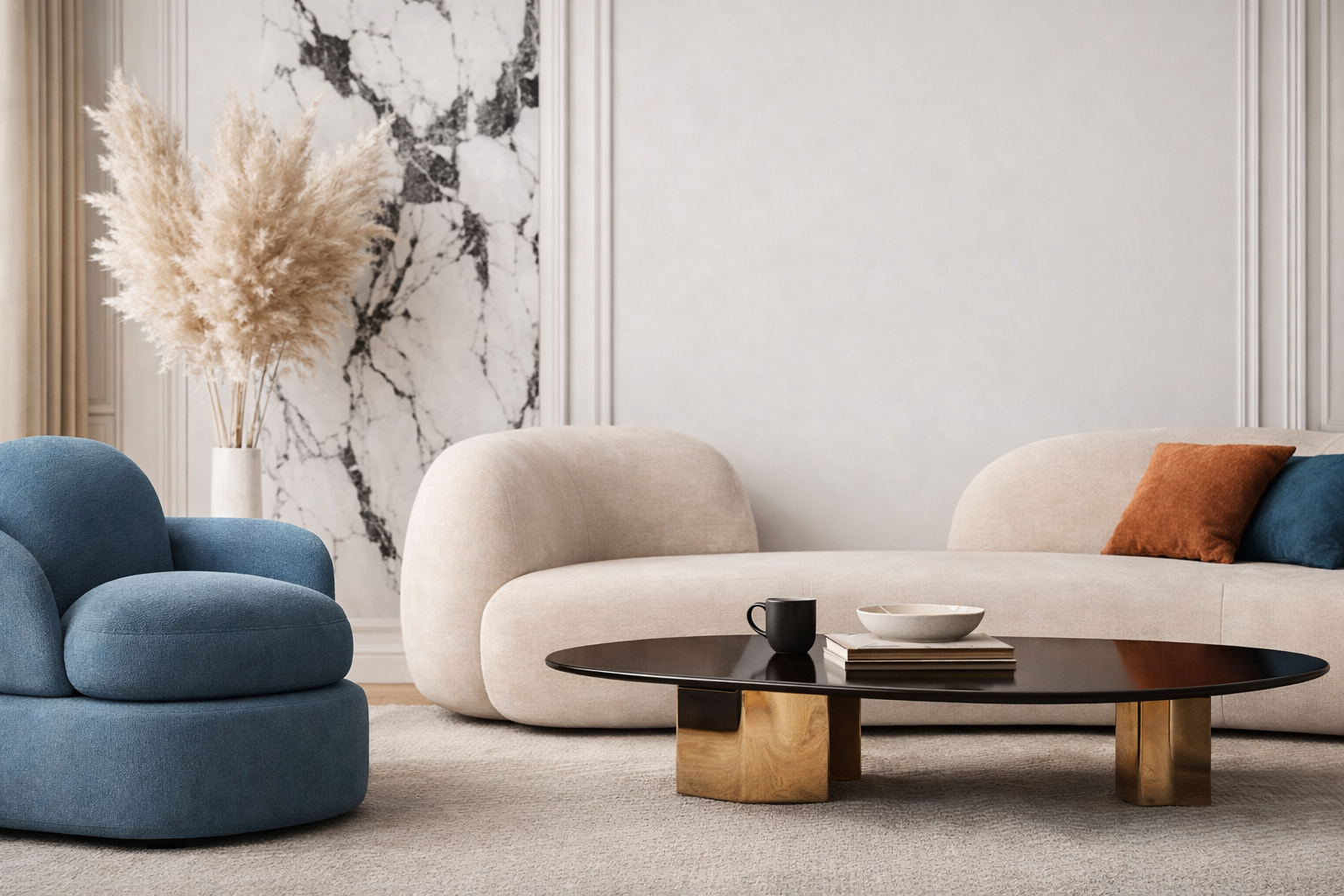
One of the most eloquent elements of this year’s design language is the return of curves. Rounded sofas, tables with fluid silhouettes, arched alcoves, lamps with organic profiles: every eliminated sharp edge is a small act of kindness toward the person inhabiting the space.
This is not a purely aesthetic choice. Research on biological comfort shows that curved forms reduce visual tension and generate a calming response in the nervous system. Rigid lines, sharp angles, and cold geometries keep us in a state of unconscious alertness. Curves, on the other hand, speak the language of nature — the one our bodies have always recognised as safe.
Interior designers now speak of soft boundary spaces: environments in which the gentleness of form guides the body and perception without imposing itself, creating a fluidity between rooms that translates into lived harmony, not merely contemplated beauty.
Materials as a form of care
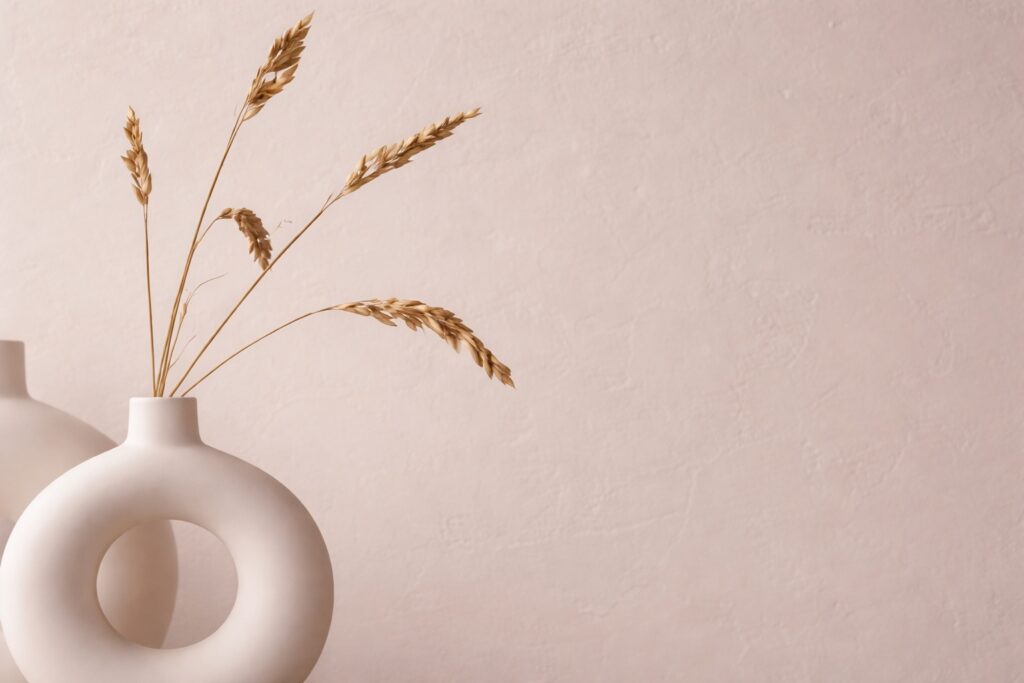
If shapes embrace, materials nourish. The choice of surfaces in 2026 is never purely visual — it is first and foremost tactile, sensory, almost therapeutic. Chunky bouclé, raw linen, woven wool, matte ceramics with irregular veining, visible wood grain with imperfections on full display, hand-trowelled plaster. Everything imperfect, authentic, alive to the touch.
In an increasingly digital world — where we spend hours touching glass screens, where surfaces are smooth, uniform, and soulless — contact with a natural material has become an act of reconnection. Not with an object, but with something larger: matter, the earth, the physical reality of things.
This sensory sustainability, as some designers call it, goes hand in hand with environmental responsibility: bamboo, reclaimed wood, untreated natural fibres. Choosing real materials is simultaneously an ethical gesture and an act of care toward oneself.
The palette that soothes
The colours of 2026 tell the same story. The sterile whites and cold greys of recent years give way to tones that evoke earth, sand, and tree bark: terracotta, ochre, greige, clay, warm sand. Alongside them, muted greens like sage and eucalyptus, deep blues like petrol, bring a sense of stability and groundedness.
These are not neutral colours in the lazy sense of the word. They work quietly, influencing the perception of space and the mood of whoever inhabits it. Colour psychology confirms what the eye already intuits: earthy tones lower cortisol levels, natural greens reduce anxiety, blue promotes focus and calm. The home, in effect, becomes an environment designed for mental wellbeing — even without our noticing.
Light that creates atmosphere, not just illumination
The way we think about light has changed too. It is no longer about illuminating a space in a functional sense, but about crafting atmospheres that shift throughout the day, follow the body’s natural rhythms, and envelop without dazzling. Satin globe pendants, rounded wall sconces, LED strips embedded in curved niches that emit a warm, diffused glow.
It is the same logic as chrono-nutrition applied to interiors: respecting biological rhythms, accompanying the body through the transition from day to night, never assaulting the eye with harsh contrasts. Light designed to make you feel well, not to make a statement.
Living with intention
There is a word that recurs in the most thoughtful conversations about contemporary design, and that word is intention. Choosing every element of one’s home with awareness — not because it is trending, not because someone else did it, but because it responds to a genuine need, a precise emotion, an authentically personal vision of oneself.
This is, ultimately, what 2026 design is teaching us: that a beautiful space and a good space are not two separate things. That aesthetics, when authentic, is already a form of care. And that the most refined home is not the one that impresses guests, but the one that makes the person who lives there feel truly at home.
In a historical moment when everything seems precarious, noisy, and fast, building a sensory sanctuary is not an indulgence. It is a necessity. And perhaps, even a quiet act of resistance.
Interested in partnering with Zayra Living? Discover how we help brands position themselves through high-quality editorial content.
Write to hello@zayraliving.com