

For much of modern design history, innovation has been associated with new forms, technologies and production processes. Today, however, some of the most important changes are taking place at an even deeper level: in the materials themselves.
Designers, architects and researchers are experimenting with substances grown from fungi, derived from agricultural waste, capable of self-repair or able to respond to light and temperature. These materials are not simply alternatives to wood, plastic or concrete: they are changing the way we imagine, produce and use objects and buildings.
The future of design may therefore depend not only on what we create, but also on what we choose to create it from.
Beyond Aesthetics
Every object has its own material history. Before reaching its final form, raw materials must be extracted, processed, transported and transformed. At the end of their useful life, they may be repaired, recycled, dismantled or discarded.
Material selection therefore affects much more than aesthetics. It influences durability, energy consumption, waste production, indoor comfort and future recovery possibilities.
However, no material is automatically sustainable. Its impact depends on where it comes from, how it is produced, how long it lasts and what happens at the end of its life cycle.
Mycelium: Materials That Are Grown, Not Manufactured
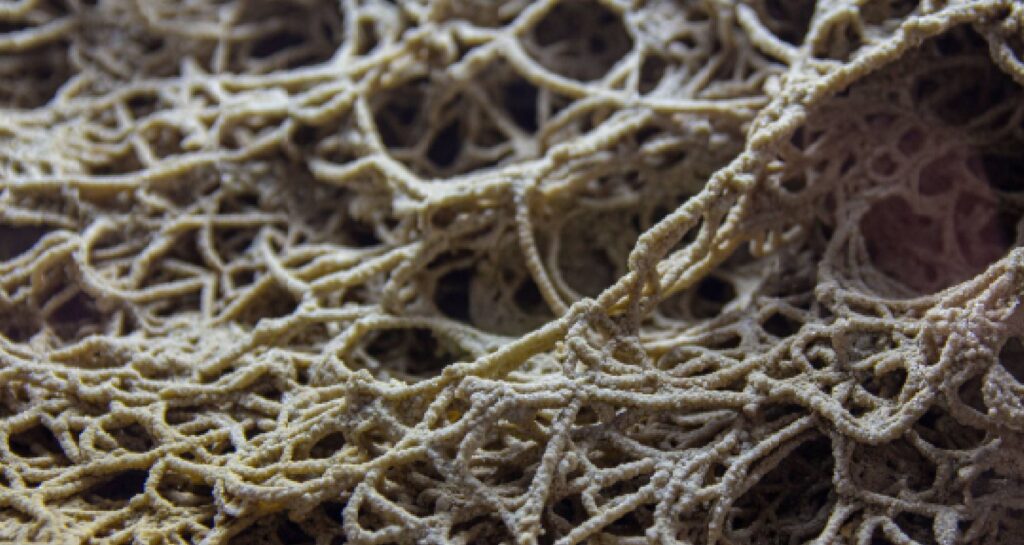
Mycelium is the network of filaments through which fungi grow. When cultivated on agricultural residues, it can act as a natural binder and create lightweight composites.
It can be shaped inside moulds to produce packaging, acoustic panels, insulation and experimental furniture. Its value lies mainly in the possibility of using biological waste as a raw material and, in some cases, creating biodegradable or compostable products.
Mycelium surfaces often have an irregular, organic appearance that makes the material’s biological origin visible. However, limitations remain, particularly in terms of moisture resistance, durability and structural performance.
For this reason, its most immediate applications are mainly in interior components, packaging and temporary installations.
Hempcrete: Walls That Breathe
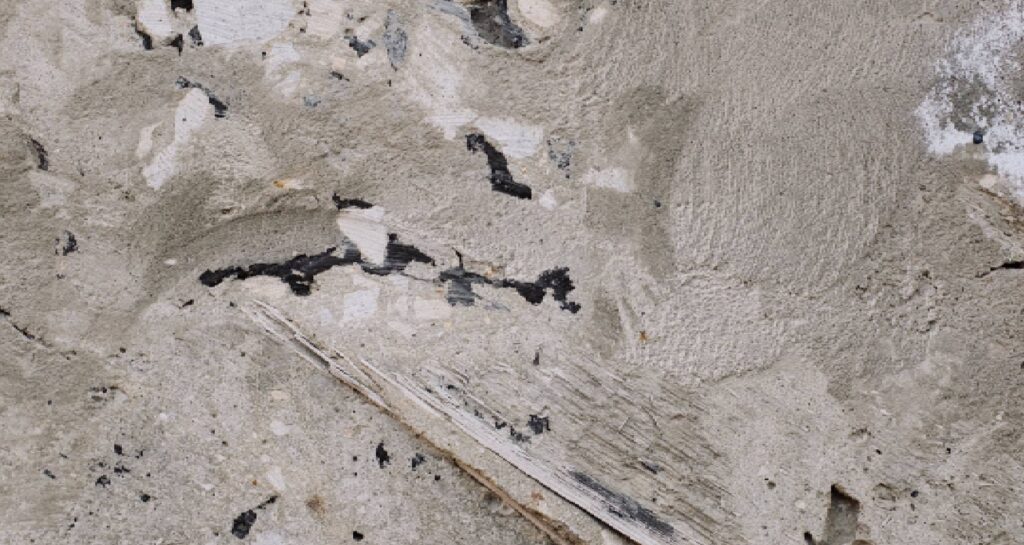
Hempcrete is produced by combining the woody inner part of the hemp plant with lime and water.
It is not generally used as a structural material, but as insulation and infill. It offers interesting thermal properties, can help regulate humidity and creates warmer, more tactile interiors.
Because hemp grows quickly and absorbs carbon dioxide, this material is also being studied for its potential to reduce the environmental impact of buildings.
It does not directly replace concrete, but it could change the way walls insulate, breathe and interact with interior spaces.
Algae: Living Façades
Algae are being used to develop pigments, bioplastics, foams and experimental materials.
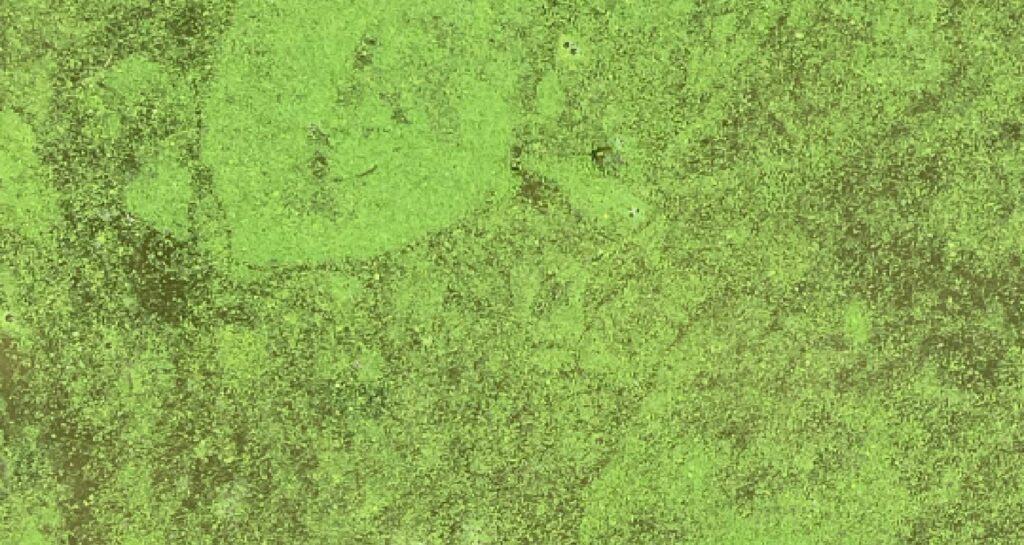
In architecture, microalgae can be integrated into façades and windows through photobioreactor systems. These organisms use light and carbon dioxide as they grow, contributing to shading and generating biomass.
The visual effect can be striking: the façade changes colour and density over time, transforming the building into a dynamic biological system.
However, these systems require maintenance, monitoring and controlled operating conditions. The true innovation therefore lies not only in using a natural material, but in integrating biological growth with architectural performance.
Biochar: Turning Waste into Stable Carbon
Biochar is a carbon-rich material obtained by heating biomass in a low-oxygen environment.
It can be produced from agricultural residues and wood waste and incorporated into concrete, plaster and insulation. Its appeal comes from its ability to turn waste into a useful ingredient while retaining some of the carbon previously absorbed by plants.
Buildings could therefore also become places for carbon storage.
The performance of biochar varies according to the raw material, production process and final formulation. It is not a single standardised material, but a wider category that is still evolving.
Self-Healing Concrete
Cracks are one of the main problems affecting concrete structures. They allow water to enter, accelerating deterioration and increasing maintenance needs.
Self-healing concrete aims to address this issue through capsules containing repair agents or bacteria capable of producing minerals and sealing fractures.
The goal is not to create an indestructible material, but to extend its lifespan and reduce the need for repairs.
This technology introduces an important principle: a sustainable material is not necessarily the one with the lowest initial impact, but also one that lasts longer and requires fewer replacements.
Materials Made from Waste
Not every material of the future needs to be grown in a laboratory.
Recycled textiles, construction debris, agricultural residues and food by-products are already being transformed into panels, tiles, surfaces and furniture.
Grape skins, rice husks, sawdust and shells can become new design resources. However, using waste is not enough: a recycled product may still contain toxic binders or be impossible to recycle again.
The most effective solutions are those that create genuine material loops rather than simply delaying disposal.
No Material Is Perfect
Terms such as natural, biodegradable, bio-based or carbon-negative can be misleading when they are not properly explained.
A biodegradable material may require industrial facilities. A natural composite may contain synthetic polymers. An innovative product may be difficult to repair or recycle.
For this reason, every material should be assessed across its entire life cycle: origin, production, transport, durability, maintenance and end of life.
The future of design will not depend on a single miraculous solution, but on the ability to choose the right material for each application.
The most revolutionary materials may not be the ones with the most futuristic appearance, but those that last longer, use what already exists and leave something valuable behind once their original function has ended.
Explore collaboration opportunities with Zayra Living.
We welcome selected collaborations with brands, destinations and design-led spaces aligned with our editorial vision.
For partnership enquiries, contact hello@zayraliving.com