
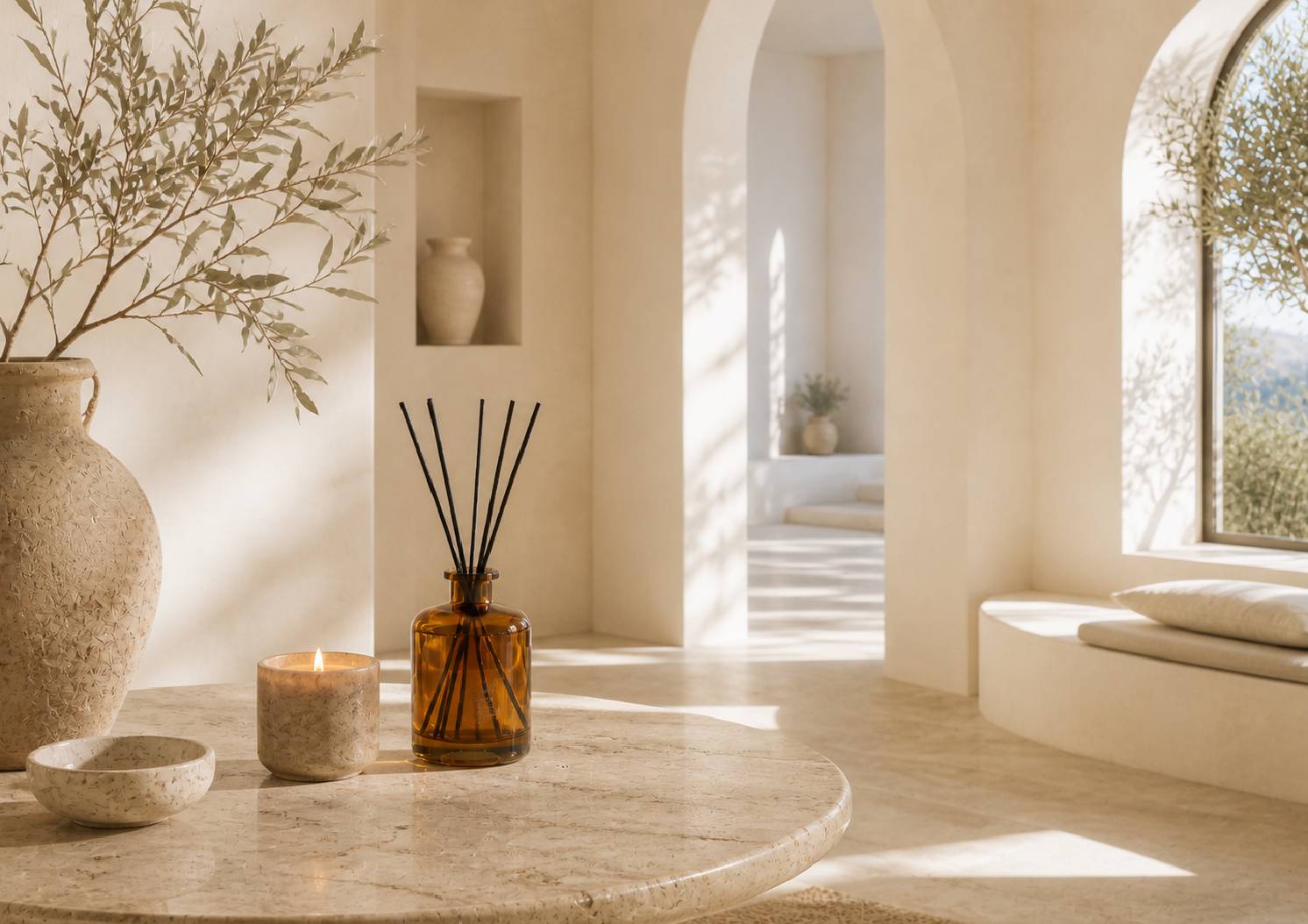
The word “perfume” carries its own history within it: from the Latin per fumum, meaning “through smoke”. In ancient Egypt, Mesopotamia and Renaissance courts, burning precious resins and rare woods represented one of the highest rituals of hospitality and domestic sacredness.
In 1533, when Catherine de’ Medici left Florence to join the French court, she brought with her far more than a bridal trousseau. She brought an Italian idea of living: one made of rituals, beauty, body care and atmospheres. Historical tradition speaks of figures like Renato Bianco, a Florentine perfumer who would become known in Paris as René le Florentin. From that moment on, perfume began to establish itself not only as a personal ornament, but as an invisible language of power, intimacy and spatial identity.
In the Arab world, the culture of scent takes on a deeply ritual dimension. The term ‘itr, from which “attar” also derives, refers to perfume, fragrance and aromatic essence; yet in everyday practice, scent becomes far more than an aromatic note. Burning bakhoor to welcome guests, allowing the smoke of oud to pass among those present, diffusing the precious intensity of Taif rose gathered in the early hours of the morning in the mountain gardens above Taif: these are gestures that build atmosphere, express respect and transform hospitality into a sensory experience before it becomes a verbal one.
The Invisible Design of Atmosphere
In contemporary design, the experience of a space no longer depends only on what we see. Materials, light, proportions and colours remain fundamental elements, but something invisible also helps define the first impression of a place: scent.
A fragrance can make a room feel more relaxing, a hotel more recognisable, a boutique more memorable. It can evoke a season, a landscape, a feeling of calm or energy. In a world where many interiors are increasingly designed to be photographed, scent introduces a deeper and more personal dimension: memory.
Entering a space means perceiving a set of signals. Light suggests a rhythm, materials communicate temperature and texture, sound changes the way we move. Scent, however, acts more quietly. It does not impose itself like a piece of furniture, but builds atmosphere.
A note of creamy sandalwood can make a space feel warmer and more intimate. A bergamot accord can make it feel bright and vibrant. Dhofar frankincense, Arabian amber, white musk or green tea can transform an interior into an emotional experience before it becomes an aesthetic one.
This is why home fragrances are becoming an integral part of the language of interior design. They are no longer just a decorative detail, but an element capable of defining the identity of a place.
Memory, Emotion and Recognition
Scent has a direct relationship with memory. A familiar fragrance is enough to bring back a home, a journey, a person or a precise moment. It is not only about making an environment pleasant, but about creating a memory. A guest may forget the exact colour of a wall or the shape of an armchair, but they may remember the feeling they experienced when entering a hotel lobby, if that feeling was distinctive enough.
In this sense, scent becomes a form of invisible branding: it does not speak through a logo, but through perception.
Even in domestic spaces, the role of fragrance is changing. Candles, diffusers, textile sprays and essential oils are no longer chosen simply to add a pleasant note to the air, but to create micro-atmospheres that tell the story of who we are and how we want to be remembered.
Interested in partnering with Zayra Living? Discover how to collaborate with us to create valuable content for your brand. Get in touch.
Write to hello@zayraliving.com