
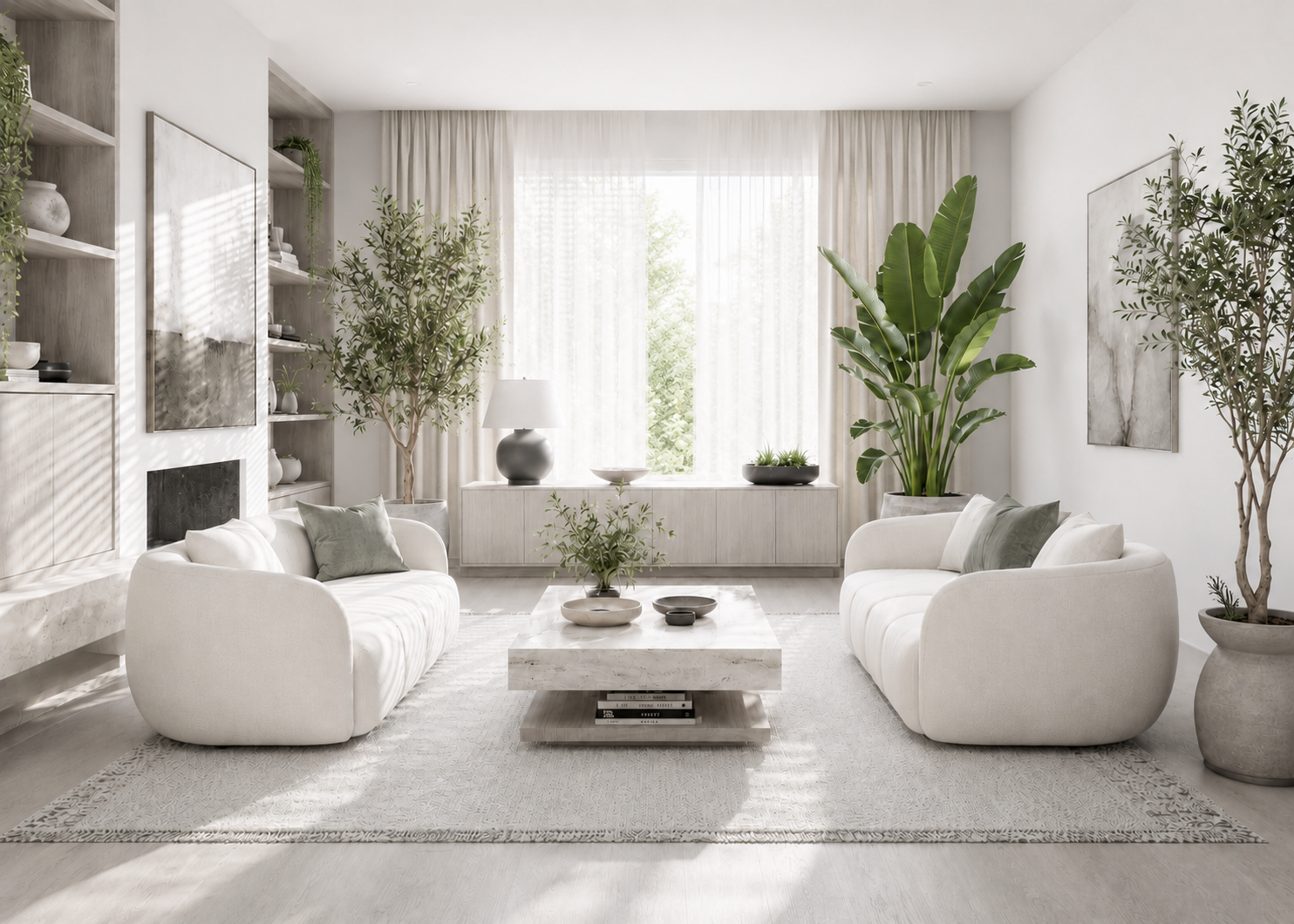
Technology at home is often associated with screens, devices and visible automation. Yet in contemporary interiors, digital tools can also take a softer and more discreet role: supporting comfort, atmosphere and a closer connection with nature.
This is where biophilic tech becomes interesting. Inspired by biophilic design, which focuses on the relationship between people and the natural world, this approach uses technology to make interiors feel more balanced, sensory and liveable. It is not only about adding plants to a room. It is about light, air, sound, rhythm and atmosphere.
Nature as Part of Everyday Comfort
The idea of luxury living is no longer defined only by expensive materials or iconic furniture. Increasingly, it is also connected to the quality of the everyday experience a home can create.
A calm, breathable and well-balanced space can feel more valuable than one filled with unnecessary devices. Biophilic tech can support this idea by using digital tools in a subtle way: not to dominate the home, but to make it feel more harmonious.
From air quality monitoring to adaptive lighting, these technologies can help interiors feel more connected to natural rhythms. In urban environments, where direct contact with nature is not always immediate, this kind of comfort can become an important part of contemporary living.
Circadian Lighting and the Rhythm of the Day
One of the clearest examples is circadian lighting. Unlike traditional lighting, these systems can change colour temperature and intensity throughout the day.
In the morning, light can become brighter and cooler, giving a space a more energetic feeling. In the evening, it can shift to warmer and softer tones, creating a calmer atmosphere. The result is not necessarily futuristic. It is simply a more natural relationship between the home and the passing of time.
Lighting has always shaped how we experience interiors. With technology, it can become more responsive, more atmospheric and more aligned with daily rituals.
Air, Sound and Subtle Wellness
Biophilic tech can also include systems that improve comfort without becoming the centre of attention.
Air purifiers, indoor climate sensors, humidity monitors and smart ventilation systems are increasingly present in modern homes. They may not transform the visual identity of a room, but they can influence how the space feels.
Sound is another important layer. Natural soundscapes, soft background audio and noise-reducing technologies can help shape the atmosphere of an interior. In this sense, technology becomes less about entertainment and more about creating a sensory environment.
Often, the most successful technology is the one that disappears into the background. It works quietly, supporting the home without making it feel overly digital.
Digital Nature and Interior Atmosphere
Another interesting direction is digital nature. Screens, projections and ambient displays can recreate landscapes, natural patterns, moving light or abstract environments inspired by water, sky, plants and organic forms.
This does not replace real nature. A digital landscape cannot substitute a garden, a balcony or natural light. But in dense urban settings, it can become a visual and emotional bridge between the interior and the outside world.
For homes, hotels and contemporary living spaces, this opens up a more atmospheric use of technology: one that does not feel cold or mechanical, but softer, calmer and more connected to the senses.
A Softer Idea of Smart Living
Smart living does not always need to mean adding more devices. Sometimes, it means choosing technologies that make a space feel simpler, more comfortable and more natural.
Biophilic tech suggests a different way of thinking about innovation at home. It is not about making technology more visible. It is about using it with more intention.
In this vision of living, technology is not separate from nature. It becomes a quiet tool to bring us closer to it.
Explore collaboration opportunities with Zayra Living.
We welcome selected collaborations with brands, destinations and design-led spaces aligned with our editorial vision.
For partnership enquiries, contact hello@zayraliving.com