
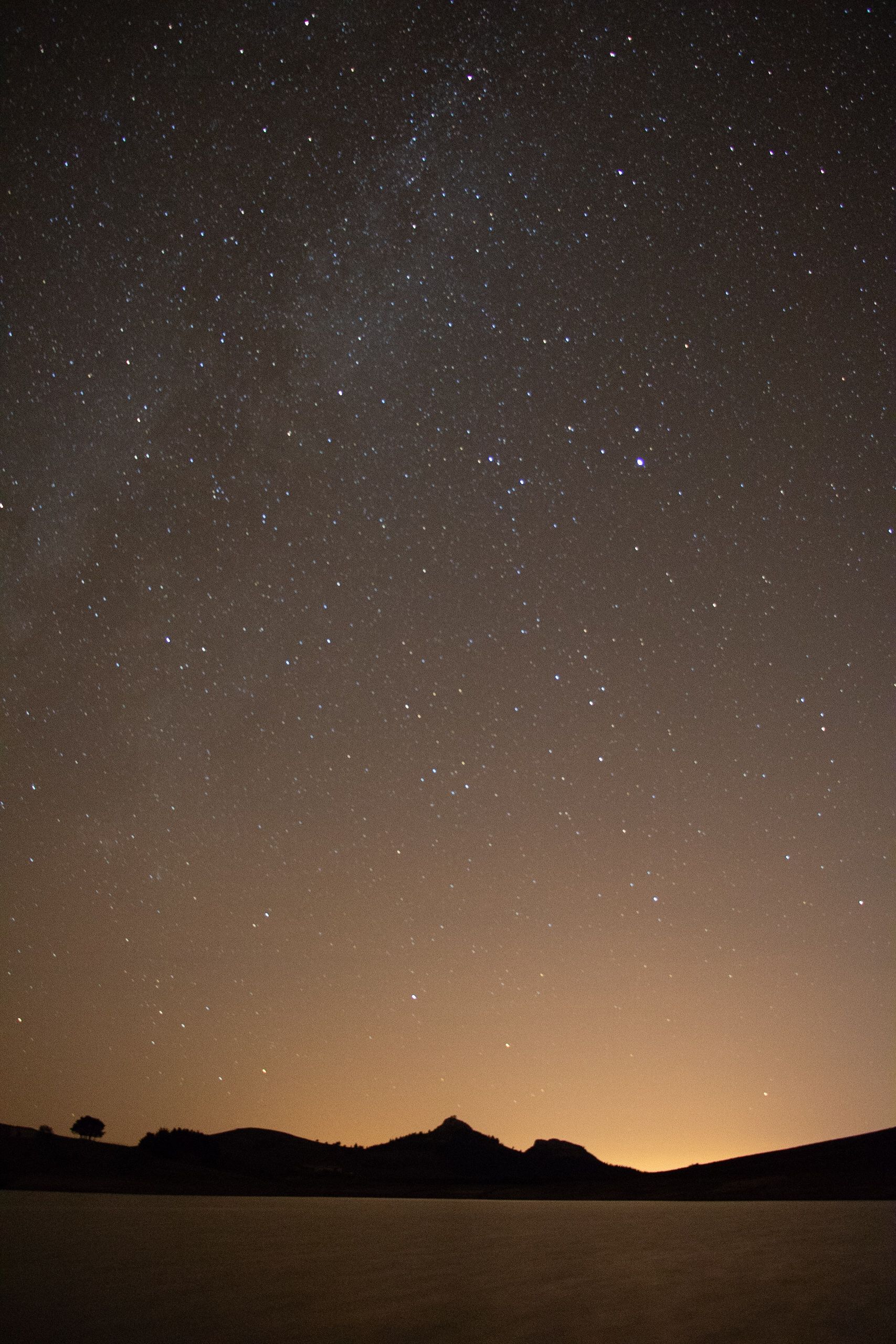
Few regions have as deep a relationship with the night sky as the desert.
For generations, desert communities and seafarers read the stars as a guide. Individual stars and constellations helped them recognise the seasons, anticipate winds and rain, and navigate travel, grazing, fishing and pearling. Knowing the sky was not a pastime; it was knowledge essential to life.
That legacy is still written across the sky. Many of the stars most familiar to astronomers today have names of Arabic origin, including Aldebaran, Altair, Deneb, Rigel and Betelgeuse. They reflect the legacy of scholars such as the 10th-century astronomer ʿAbd al-Raḥmān al-Ṣūfī, whose Book of the Fixed Stars became one of the most influential astronomical works of the medieval world.
When travellers look up from the desert today, in a sense, they are reading a celestial map that owes much to the astronomical tradition that developed in this part of the world.
An Experience That Has Become Rare
For most of human history, looking up at night meant seeing the stars.
Today, for much of the world’s urban population, that experience is no longer part of everyday life. Cities shine brighter than ever, and the growing scarcity of dark skies is changing the way we travel.
From evenings among the dunes and nights spent beneath open skies to trips planned around a meteor shower or an eclipse, stargazing is moving from a niche interest to an increasingly popular travel experience.
It even has a name: noctourism.
From Stargazing to Noctourism
Noctourism describes travel experiences that take place after dark. It includes astrotourism — travel centred on stargazing and astronomy — but also moonlit landscapes, evening desert excursions, outdoor dining and after-hours cultural experiences.
The trend gained significant attention in travel forecasts for 2025. Research commissioned by Booking.com among more than 27,000 travellers across 33 countries and territories found that 62% were considering destinations with darker skies. Interest focused particularly on starbathing, constellation tracking and travelling to witness rare celestial events.
Climate also plays an important role. In warmer regions, evening is often the most pleasant time to be outdoors. More than half of those surveyed (57%) expected to plan more activities during the evening and early morning, when temperatures are lower.
As the sun sets, the desert changes: the sand cools, the air grows fresher and the landscape opens onto one of nature’s most captivating spectacles.
Looking Up Again
What makes the renewed interest in stargazing particularly interesting is that there is nothing new about the experience itself.
For centuries, the night sky was part of everyday life: a way to navigate, understand the seasons and make sense of the world. Today, artificial light has made that same view increasingly difficult to experience, particularly in cities.
Perhaps this is what makes stargazing feel different now. We are not discovering the night sky for the first time, but rediscovering something that was once familiar.
And in the desert, where the stars have long been connected to navigation, knowledge and daily life, that relationship carries an even deeper history.